
Flooring That Flexes Without Failing
Vinyl Flooring Installation in Oakhurst for spaces needing water-resistant surfaces that install over existing floors
Vinyl plank flooring consists of multiple layers including a waterproof core that prevents the swelling and warping that occurs when water soaks into wood-based materials. The installation method affects performance—floating floors lock together without adhesive and accommodate substrate movement, while glue-down installations bond directly to the subfloor for a firmer feel underfoot. Rocam Flooring installs vinyl flooring in Oakhurst and across New Jersey, selecting installation methods based on substrate type and room conditions.
Installation begins with checking substrate flatness, since vinyl telegraphs imperfections more visibly than thicker materials like tile. Bumps and dips in the subfloor show through as raised or sunken spots in the finished floor, particularly with thinner vinyl products. Floating installations require underlayment that cushions the vinyl and reduces the hollow sound when walking across the floor.
Schedule a flooring consultation to review substrate conditions and compare floating versus glue-down installation approaches.
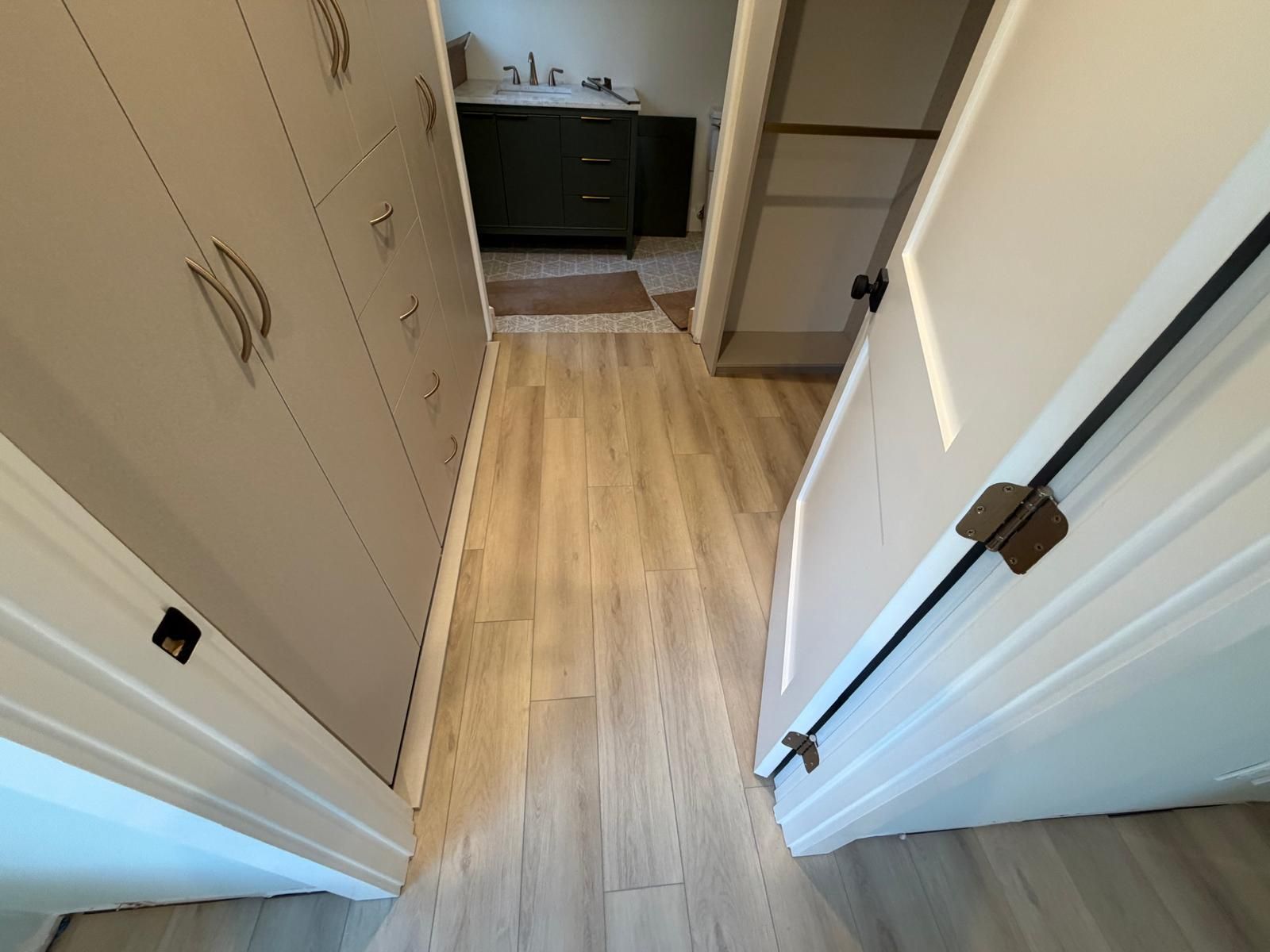
The details
Why Modern Vinyl Works for Residential Upgrades
Vinyl plank construction uses a printed design layer that replicates wood grain or stone textures, protected by a clear wear layer rated in mils—thicker wear layers resist scratching and denting better. Twenty-mil wear layers handle residential traffic, while twelve-mil versions show wear faster in entryways and kitchens. The core material varies between solid vinyl, wood-plastic composite, and stone-plastic composite, with SPC cores providing the most rigidity and dent resistance.
After installation completes, you walk across floors that feel slightly softer than laminate or tile but firmer than traditional sheet vinyl. Water spills sit on the surface without soaking into seams, and the floor maintains its appearance in bathrooms and laundry rooms where moisture damages other flooring types. The surface cleans with standard floor cleaners without the special treatments that hardwood requires, and damaged planks can be removed and replaced individually without refinishing the entire floor.
Vinyl handles temperature fluctuations better than laminate, making it suitable for spaces without climate control like enclosed porches and mudrooms. The material remains stable in high humidity without the expansion issues that cause laminate to buckle, though direct sunlight fades the printed design layer over years of exposure near south-facing windows.
FAQs
What Property Owners Usually Ask
Choosing between vinyl installation methods and understanding product specifications helps match flooring to specific room conditions and usage patterns.
What thickness provides the best feel and durability for vinyl plank flooring?
Planks between five and eight millimeters thick feel substantial underfoot and resist the flexing that causes locking mechanisms to fail over time. Thinner products cost less but telegraph subfloor imperfections more noticeably and feel less stable when walked on.
How does vinyl perform in Oakhurst homes with concrete slab foundations?
Vinyl installs directly over concrete without the moisture issues that affect laminate and hardwood, as long as the slab is level and free of active moisture problems. Moisture testing with calcium chloride kits identifies slabs with vapor emission rates too high for safe flooring installation.
What distinguishes luxury vinyl plank from standard vinyl flooring?
Luxury vinyl uses thicker construction with enhanced wear layers and more realistic embossing that matches the printed grain pattern, creating texture that feels similar to the material being replicated. Standard vinyl relies mainly on the printed image without dimensional texture.
Can vinyl be installed over existing tile or hardwood?
Installation over existing hard surfaces works if the substrate is level, clean, and well-bonded to the subfloor below. Loose tiles or hollow-sounding areas indicate bonding failures that must be repaired before vinyl installation, since movement in the substrate transfers to the vinyl and causes seams to separate.
What maintenance keeps vinyl floors looking new long-term?
Regular sweeping removes grit that scratches the wear layer when ground underfoot, and damp mopping with pH-neutral cleaners prevents the film buildup that makes floors look dull. Avoid abrasive scrubbers and harsh chemicals that damage the wear layer and expose the printed design to faster wear.
Rocam Flooring evaluates your existing floors and provides installation recommendations based on substrate type and room moisture levels. Request an estimate to compare vinyl product options and determine which wear layer rating matches your traffic patterns.