
Surfaces Restored Without Full Replacement
Floor Refinishing in Oakhurst for hardwood floors showing scratches and finish wear after years of use
Scratches accumulate in hardwood floors over years of furniture movement, pet traffic, and grit tracked in from outside, dulling the finish and exposing bare wood in high-traffic paths. Rocam Flooring refinishes hardwood floors in Oakhurst and throughout New Jersey, sanding away surface damage and applying fresh finish coats that restore the protective layer. The process removes the top layer of wood, erasing scratches that penetrate through the finish into the grain.
Refinishing involves multiple sanding passes with progressively finer grits, starting with coarse abrasives that remove old finish and deep scratches, then moving to fine grits that smooth the wood surface before staining and sealing. Dust containment systems capture most of the sawdust during sanding, though fine particles still settle throughout the home and require thorough cleaning after the work completes.
Request an assessment to determine if your floor's remaining wood thickness allows refinishing or requires replacement in damaged areas.
The details
What Changes After Sanding and Refinishing
The sanding process removes between one-sixteenth and one-eighth inch of wood depending on how deep existing scratches and dents penetrate. Drum sanders handle the main floor area, while edge sanders reach the perimeter where the drum cannot fit, and hand scrapers address corners and tight spaces around radiators and door frames. Each sanding pass must follow the wood grain direction to avoid cross-grain scratches that show through the final finish.
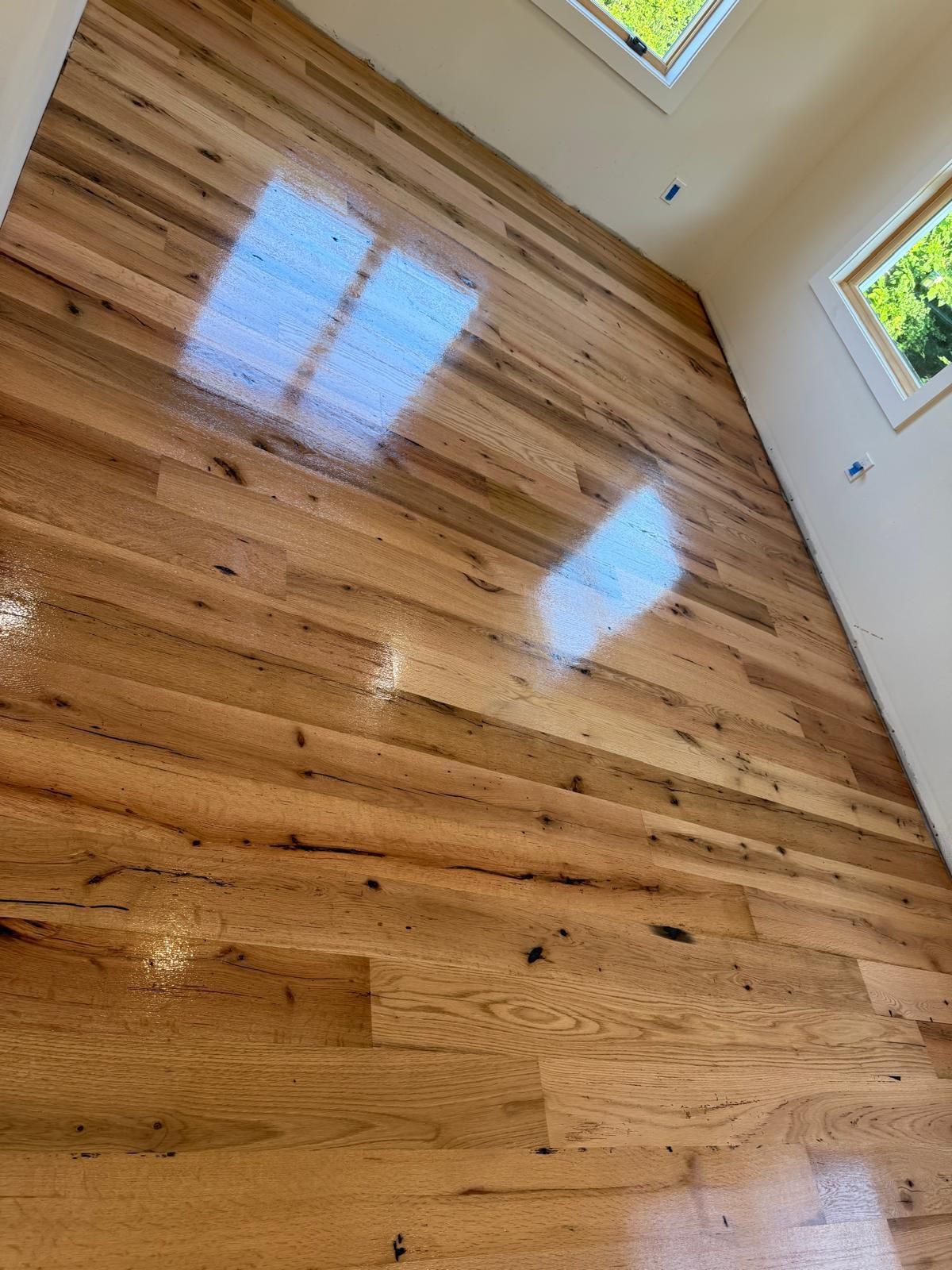
After finish coats cure for 24 to 48 hours, you walk across floors that reflect light evenly without the dull patches where finish wore away. The wood grain appears more distinct, and the surface feels smooth underfoot without the rough texture that develops when finish wears down to bare wood. Water beads up instead of soaking into the grain, and the finish resists scuffing from normal foot traffic.
Refinishing works only when enough wood thickness remains above the tongue-and-groove joints to allow sanding without weakening the plank structure. Floors refinished multiple times over decades eventually become too thin and require replacement. Stains that penetrate deep into the wood sometimes remain visible even after sanding, particularly around old pet stains where urine soaked through the finish.
FAQs
Answers to Frequent Service Questions
Refinishing decisions depend on understanding how much wood can be safely removed and what surface preparation produces durable finishes.
How many times can hardwood floors be refinished before replacement becomes necessary?
Most three-quarter-inch solid hardwood allows sanding four to six times over its lifespan, depending on how much wood each refinishing removes. Once the floor sands down to within one-eighth inch of the tongue-and-groove joint, further refinishing risks breaking through and weakening the floor structure.
What causes the dark lines between floorboards after refinishing?
Those lines appear where finish and dirt accumulated in the gaps between planks over years of use. Sanding cannot reach into those crevices, so the old finish remains visible as dark edges along each plank. Some refinishers fill small gaps with wood filler before finishing, though this works only for gaps narrower than one-sixteenth inch.
How long before refinished floors can handle furniture and foot traffic?
Water-based polyurethane dries enough for light walking after six to eight hours and handles furniture placement after 24 hours, though full cure takes up to two weeks. Oil-based finishes require 24 hours before walking and 48 to 72 hours before replacing furniture, with full cure happening over 30 days.
Why do some areas in Oakhurst homes need more sanding passes than others?
High-traffic pathways near entryways and hallways wear faster than wood under furniture that never moves, creating uneven surfaces that require extra sanding to level. Sun exposure also affects wear patterns, with floors near south-facing windows showing more finish breakdown from UV damage.
What determines whether staining is necessary during refinishing?
Staining changes or evens out wood color but adds time and cost to the process. If the existing wood color looks acceptable and relatively uniform after sanding, clear finish coats protect the natural tone without additional stain application. Deep scratches or board replacements sometimes show as lighter patches that staining helps blend.
Rocam Flooring evaluates floor condition and wood thickness before refinishing begins, identifying boards that need replacement before sanding. Schedule a floor inspection to review finish options and receive a detailed timeline for your project.