
Surfaces That Handle Water and Impact
Tile Installation in Oakhurst for kitchens and bathrooms where moisture resistance and durability matter
Ceramic and porcelain tile surfaces resist the water exposure that warps wood and delaminates vinyl in bathrooms and kitchens. Tile placement requires level substrates and properly mixed thinset mortar that bonds each tile without voids underneath that crack under weight. Rocam Flooring installs tile flooring throughout New Jersey, working with materials rated for floor use rather than wall-only applications that crack under foot traffic.
The installation process involves spreading thinset in sections small enough to work before the mortar skins over, then pressing each tile into the adhesive with enough pressure to collapse the trowel ridges without forcing mortar up between tiles. Spacers maintain consistent grout joint widths, which in New Jersey homes often need to accommodate seasonal substrate movement from humidity changes.
Arrange a site evaluation to review substrate conditions and determine whether additional waterproofing layers are needed.
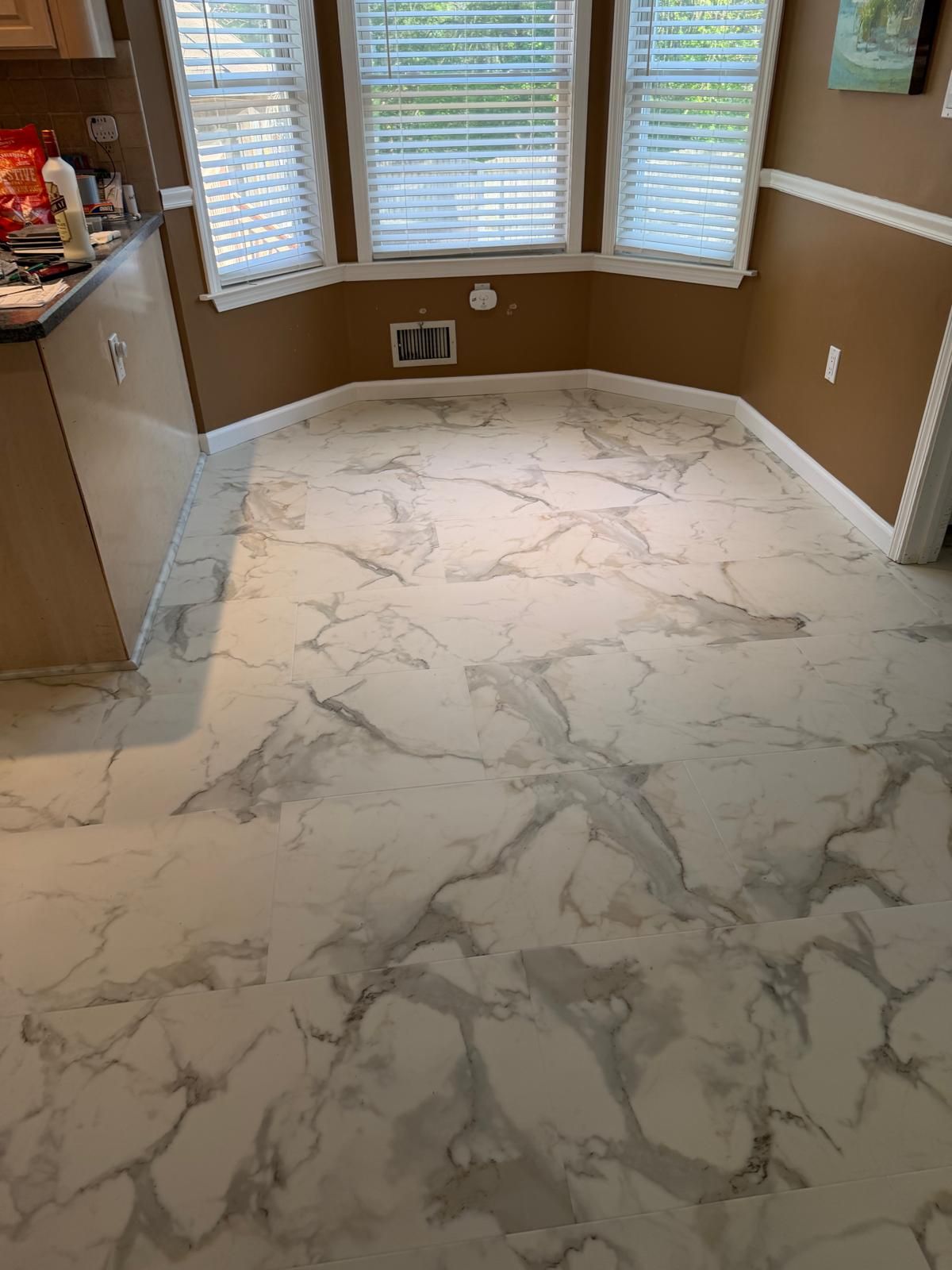
The details
What Tile Flooring Actually Accomplishes
Proper tile installation starts with substrates that flex less than industry standards allow, since excessive movement cracks grout joints and eventually fractures tiles. Concrete slabs work well if level and free of cracks, while wood subfloors require cement backer board or uncoupling membranes that prevent the tile assembly from flexing with the wood. The trowel notch size must match tile size—larger tiles need deeper trowel notches to ensure adequate mortar coverage on the back of each tile.
Once installation completes and grout cures, you notice the firm, stable surface underfoot without the give that indicates voids under tiles. Water from showers and splashing sinks sits on the surface until wiped away rather than soaking into the floor structure. Dropped objects sometimes chip tile edges, but the surrounding tiles remain unaffected unlike sheet flooring where damage spreads from the impact point.
Grout joints require sealing to prevent staining from dirt and moisture infiltration, particularly in floor installations where foot traffic grinds particles into the porous grout. Epoxy grout resists staining without sealing but costs more and requires faster installation since it hardens quickly. Unsealed cement grout absorbs liquids and darkens over time unless maintained with periodic sealer application..
FAQs
Questions Before Starting Your Project
Tile selection and installation methods affect both immediate appearance and long-term maintenance requirements in wet areas.
What distinguishes porcelain from ceramic tile for floor installations?
Porcelain absorbs less than 0.5 percent of its weight in water due to denser composition and higher firing temperatures, making it more frost-resistant and durable than standard ceramic. Ceramic tile works well indoors but can crack if used in entryways where freeze-thaw cycles occur in Oakhurst winters.
How does substrate preparation affect tile longevity?
Tiles installed over unlevel substrates develop hollow spots where mortar doesn't contact the tile back, creating weak points that crack when weight concentrates on unsupported areas. Substrates must be flat within one-eighth inch over ten feet for proper mortar coverage and load distribution.
What grout joint width works best for floor tile?
Joints between one-eighth and three-sixteenths inch wide accommodate slight tile size variations while providing enough grout to resist cracking from substrate movement. Larger tiles often use narrower joints for aesthetic reasons, though this requires tiles with very consistent dimensions to avoid lippage where edges don't align.
When should waterproofing membranes be installed under bathroom tile?
Membranes protect wood subfloors from water that seeps through grout joints and tile cracks, preventing rot in the structure below. They are essential in showers and around bathtubs, and recommended for full bathroom floors in homes where leaks would damage finished spaces below.
What tile rating indicates adequate slip resistance for wet areas?
Tiles rated 0.42 or higher on the Dynamic Coefficient of Friction scale provide slip resistance when wet, which matters for bathroom floors and entryways where water gets tracked inside. Polished tiles often measure below this threshold and become slippery when wet.
Rocam Flooring provides installation estimates after measuring your space and assessing subfloor conditions. Contact us to review tile options and determine which underlayment specifications your project requires.