
Modular Flooring That Handles Real Replacement Demands
Carpet Tile Installation in Oakhurst for residential and commercial spaces with worn, damaged, or uneven floor surfaces
Carpet tiles offer something broadloom carpet cannot: the ability to replace individual sections without pulling up an entire room. Rocam Flooring installs carpet tiles for residential and commercial spaces in Oakhurst, handling everything from initial surface preparation through pattern alignment and precise cutting around walls and fixed obstacles. The installation process requires the same preparation discipline as any hard flooring—a surface that is not clean, flat, and structurally sound will cause tiles to lift, shift, or develop visible seams regardless of how carefully they are placed.
Every installation begins with surface cleaning and floor preparation, removing adhesive residue, leveling low spots, and confirming the substrate is dry and stable. Tile layout is then planned before any tiles are set, establishing a center point or working line that keeps the pattern aligned from the midpoint of the room outward rather than from wall to wall—this approach prevents the narrow cut pieces at the perimeter that make a room feel visually off-center. Cuts around walls, columns, door frames, and fixed furniture are made individually to fit each specific obstacle cleanly.
Schedule a walkthrough to review your current floor condition and discuss the layout approach and tile options that suit the space and its use.
The details
The Difference Between Placed Tiles and Installed Ones
Carpet tiles that are simply dropped into position without proper preparation and adhesive management will migrate under foot traffic, separating at seams and bunching at walls within weeks of installation. The preparation phase—surface cleaning, leveling, and confirming the substrate condition—is what determines whether the adhesive bond holds over the full lifespan of the floor. In commercial settings where traffic is concentrated along specific paths, and in residential spaces where pets or rolling chairs are part of the daily use pattern, that bond is tested constantly, and shortcuts taken during prep show up quickly as tile movement and visible gaps.
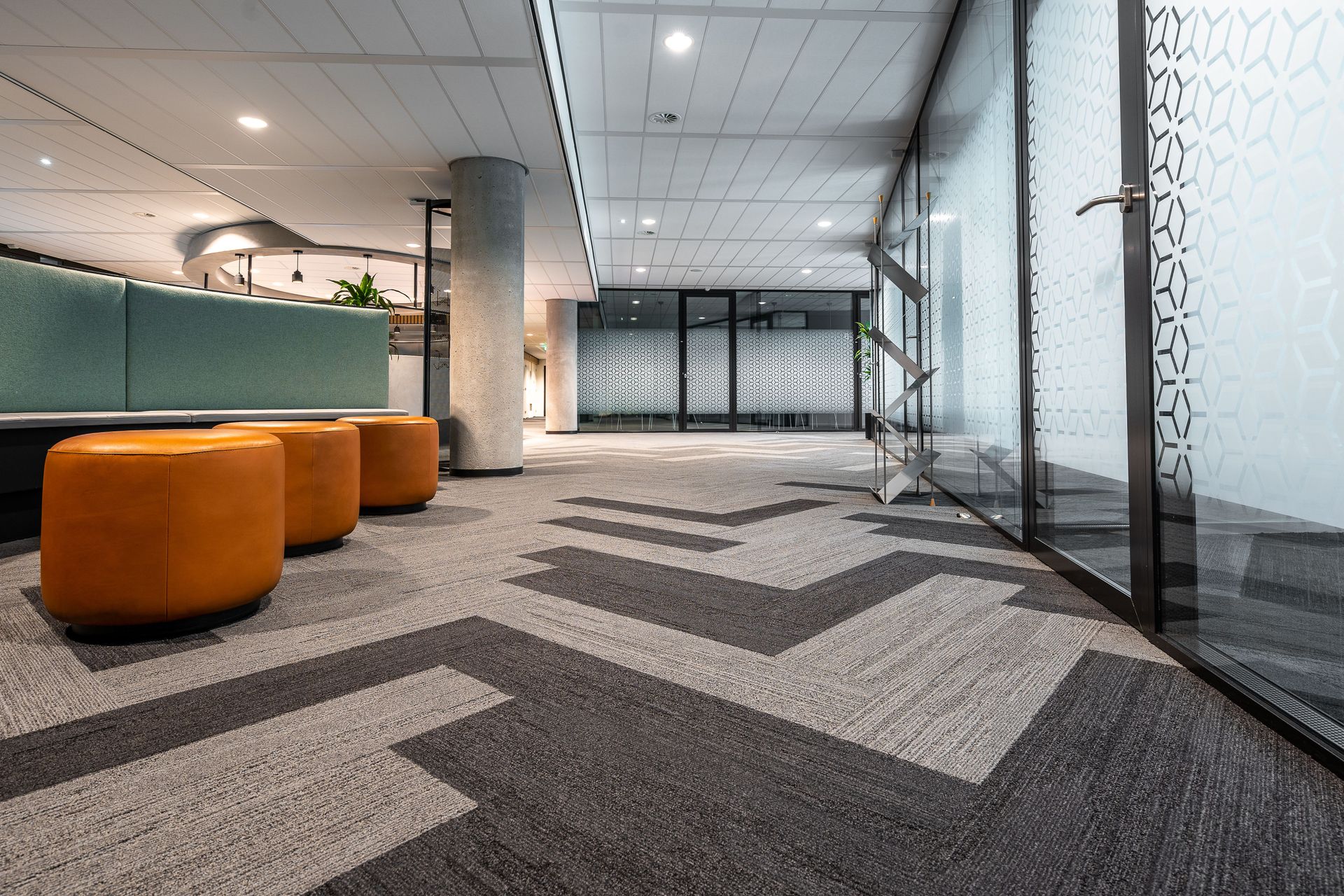
After installation, the floor presents as a consistent, aligned surface with tight seams, pattern continuity across the room, and clean edges at walls and transitions. Individual tiles that become damaged or heavily worn can be lifted and replaced without disturbing the surrounding installation—which is the functional advantage that makes carpet tile worth the additional layout planning over broadloom. Rocam Flooring also handles replacement of damaged or worn carpet tiles in existing installations, matching the current tile size and pattern to minimize the visibility of the repair.
Pattern alignment is a planning decision made before installation begins, not a correction applied afterward. For spaces with directional patterns or multi-color tile configurations, the layout plan determines how the pattern reads from the primary entry point into the room, and cut tiles at the perimeter are sized to keep that visual balance intact.
FAQs
Common Questions About This Service
Carpet tile installation involves preparation and layout decisions that affect how the floor performs and how repairs are handled later. These questions address the specifics of what happens during the work and what the finished installation should look like.
Why does layout planning start at the center of the room rather than a wall?
Starting from a centered working line ensures that cut tiles at opposite walls are equal in size, which keeps the floor visually balanced and prevents the awkward narrow strips that appear when tiles are laid wall to wall without accounting for room dimensions.
How are carpet tiles secured to prevent movement under traffic?
Tiles are typically set with a pressure-sensitive adhesive that allows the tile to be repositioned during installation and removed for replacement later, while still providing enough tack to prevent shifting under normal foot traffic and rolling loads.
What surface preparation is required before tiles are installed?
The subfloor is cleaned of all residue, debris, and contamination, and any low spots or surface irregularities are corrected before tiles are placed—in older Oakhurst commercial properties where concrete floors often carry decades of adhesive layers from previous flooring, surface grinding or chemical removal may be part of the preparation process.
How are replacement tiles matched to an existing installation?
Tile size, backing type, and pile direction are matched to the existing field, and replacement tiles are oriented to run in the same direction as the surrounding tiles to minimize the visibility of the repair once the new tile is in place.
What does a correctly finished perimeter look like in a carpet tile installation?
Perimeter tiles are cut to fit cleanly against the wall without gaps, with cut edges running against the baseboard rather than exposed into the room, and the last full tile row before the cut row is set at a consistent distance from the wall on all sides.
Rocam Flooring installs and replaces carpet tiles in residential and commercial spaces throughout Oakhurst, managing surface preparation, layout, cutting, and pattern alignment as part of every project. Reach out to Rocam Flooring to arrange a site review and confirm what preparation and layout approach your specific space requires.