
Staircases Rebuilt for Function and Finish
Stair Renovation in Oakhurst for worn treads, damaged risers, or staircases that creak and shift underfoot
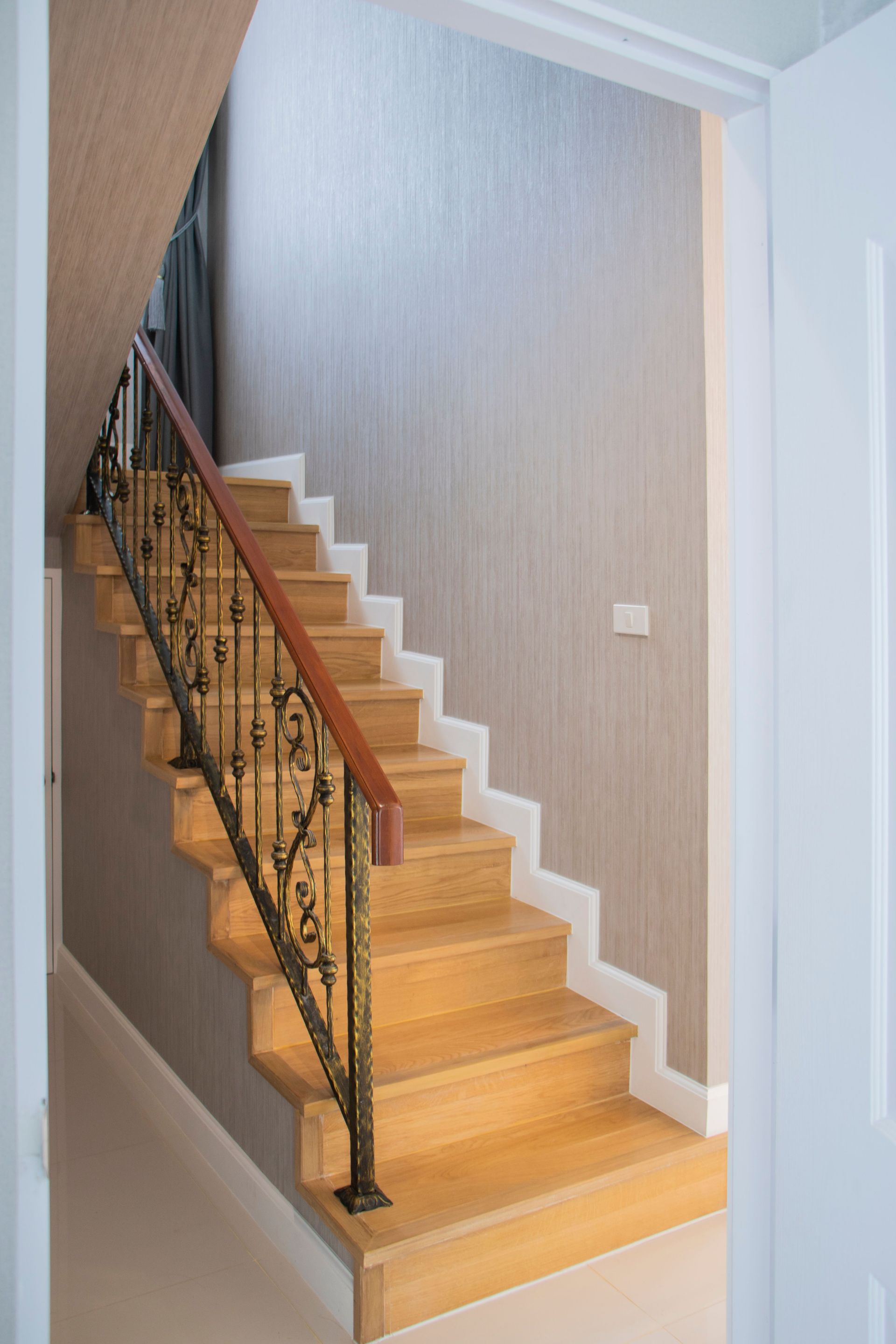
Stair surfaces deteriorate differently than flat floors—they take concentrated impact at the front edge of each tread, they flex under load in ways that accelerate fastener failure, and they are often the last part of a home to be updated when flooring is replaced elsewhere. Rocam Flooring handles stair renovation in Oakhurst, covering tread replacement and installation, riser updates, sanding and refinishing, and surface repair on worn or damaged stair components. The work is planned and sequenced from the top of the staircase downward so that completed steps are not walked on repeatedly during the project.
Renovation scope is determined by the condition of the existing structure. Treads that are worn through their finish but dimensionally sound can be sanded and refinished in place. Treads that are cracked, heavily gouged, or structurally compromised are removed and replaced, with new treads cut and fitted to the existing stringer dimensions. Risers—the vertical face between treads—are updated where they show damage, gaps, or inconsistency with the new tread material. Finishing details, including how tread edges are shaped and how transitions at the top and bottom of the staircase meet the surrounding flooring, are addressed as part of the completed scope rather than left as visible inconsistencies.
Discuss the current condition of your staircase with Rocam Flooring to identify which components require replacement and which can be restored through sanding and refinishing.
The details
Why Stair Work Requires Different Standards Than Floor Work
A floor tread that is slightly out of level is uncomfortable; a stair tread that is out of level is a safety concern. Each tread replacement involves fitting the new tread to the stringer precisely so that the riser height—the vertical distance from one tread surface to the next—remains consistent across every step. Inconsistent riser heights are the physical condition most associated with stair missteps, and they occur when replacement treads are installed without accounting for how the new tread thickness changes the effective riser height relative to the steps above and below it. Rocam Flooring accounts for that relationship during installation rather than treating each tread as an independent replacement.
After renovation, the staircase presents with consistent tread depth and riser height across all steps, no flex or movement when weight is applied to the tread, and a finished surface that matches or complements the flooring at the top and bottom of the stair run. Creaking caused by tread-to-riser separation or loose fasteners is addressed as part of the tread work, so the completed staircase is structurally quiet as well as visually consistent. In Oakhurst homes where staircases were originally built with softwood treads—pine or fir—that have worn significantly faster than the surrounding hardwood floors, replacement with a harder tread material is an option that extends the time before refinishing is needed again.
Sanding and refinishing on stairs follows the same grit progression used on flat floors, but the geometry of each tread requires detail sanding at the nosing profile and at the back corner where the tread meets the riser—areas where drum equipment cannot reach. Finish coats on stair treads are applied with the same product used on adjacent floor areas where the materials and sheen level are being matched.
FAQs
Answers About How Stair Work Gets Done
Stair renovation raises practical questions about sequencing, materials, and what the finished work should look like. The following addresses the specifics of how this work is performed and what to check once it is complete.
Why is stair renovation typically worked from the top down?
Starting at the top means each completed tread is not subjected to repeated foot traffic before the finish cures, and workers descend as they complete each step rather than stepping over wet or freshly installed surfaces to reach the next one.
How are replacement treads sized to fit existing stringers?
New treads are measured individually for each step rather than cut to a single standard length, since stringer spacing can vary across the height of the staircase—particularly in Oakhurst homes built before dimensional lumber was fully standardized, where stringer dimensions may differ slightly from contemporary framing.
What causes a staircase to creak and how is it addressed during renovation?
Creaking typically comes from tread-to-riser movement where the joint has loosened, and it is resolved by refastening or replacing the components at that joint—simply refinishing over a creaking stair does not address the structural separation causing the noise.
How is the finish on refinished stairs matched to the surrounding floor?
The same stain and finish product used on adjacent hardwood flooring is applied to the stair treads and risers so that sheen level and color read consistently from the floor to the staircase, with any necessary color adjustment made during the stain application stage before finish coats go down.
What do finished tread edges—nosings—look like after professional installation?
The nosing profile on a replacement tread should be consistent across all steps, with a smooth, even radius rather than a sharp edge or an inconsistent profile caused by cutting at varying angles, and the finish should cover the full nosing surface without pooling at the curve.
Rocam Flooring completes stair renovation projects throughout Oakhurst, managing tread replacement, riser updates, sanding, refinishing, and all finishing details in a single coordinated scope. Connect with Rocam Flooring to review the condition of your staircase and plan the renovation sequence that fits your home.