
Trim Details That Finish the Floor Correctly
Baseboards, Shoe Molding, and Trim in Oakhurst for flooring transitions that need clean edges and properly fitted corner joinery
The gap between a finished floor and a wall isn't a flaw—it's a required expansion joint in most floating floor systems, and baseboard and shoe molding exist to cover it while allowing that movement to happen underneath. Rocam Flooring installs and replaces baseboards, shoe molding, and quarter-round molding in Oakhurst as part of complete flooring projects where the transition between floor surface and wall determines how professional the finished work looks. Trim that's cut short, poorly mitered at corners, or nailed directly to the flooring rather than the wall creates problems that are immediately visible and difficult to correct after the fact.
The work involves baseboard installation and replacement, shoe molding and quarter-round installation, and the precise trim cutting and corner fitting that determines whether the finished result looks intentional or approximate. Inside corners, outside corners, and returns each require a different cut angle, and rooms with walls that aren't perfectly plumb or square—common in properties that have been through multiple renovation cycles—require on-site adjustment rather than cutting to a fixed specification and hoping it fits.
Schedule a trim walkthrough with Rocam Flooring to review your existing baseboard profile and confirm what replacement or installation work your flooring project will require.
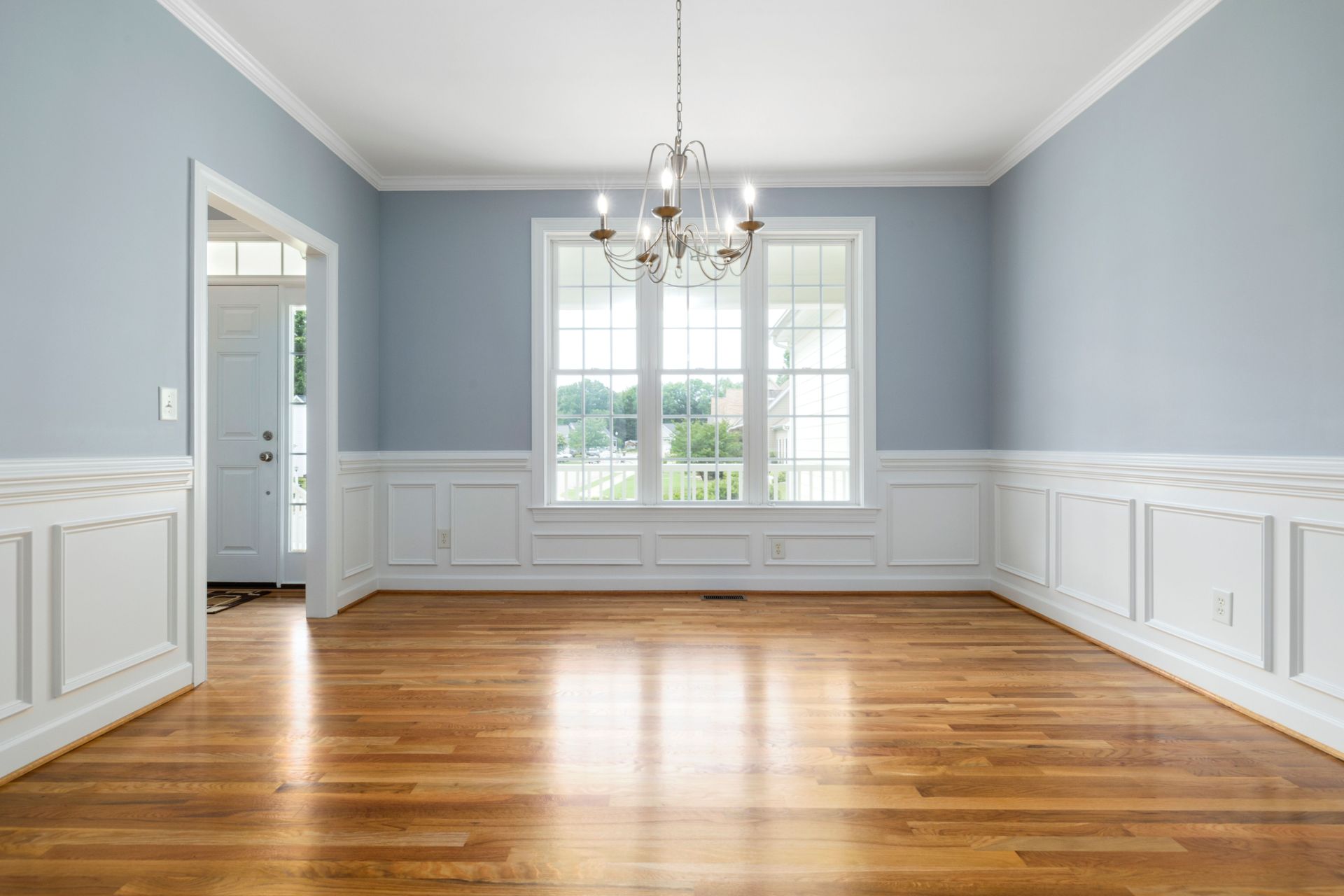
The details
The Difference Between Trim Installed and Trim Fitted
Cutting trim accurately requires accounting for the actual geometry of the room, not the geometry it's supposed to have. Walls meet at angles that deviate from 90 degrees, corners accumulate paint and drywall compound over years of touch-ups, and floor profiles vary in height across the perimeter of a room. Shoe molding and quarter-round are installed against the baseboard—not fastened to the flooring—specifically so the floor can expand and contract underneath without the molding holding it in place. Fastening trim to the flooring rather than the wall or base is a shortcut that restricts movement and causes the flooring to buckle or gap at panel joints.
After trim installation is complete, what becomes visible is a consistent reveal line around the room's perimeter, corners that close without gaps or overlapping material, and a finish that makes the floor and wall read as intentional rather than assembled. Rocam Flooring treats the trim phase as a finishing detail with its own set of standards, not as a task completed quickly because the flooring itself is already down.
Quarter-round and shoe molding serve slightly different profiles and are not interchangeable for every application. Quarter-round has a larger radius and stands away from the wall more noticeably, while shoe molding has a tighter profile that sits closer to the baseboard face. Which one suits a given installation depends on the baseboard height, the floor surface thickness, and how much of the expansion gap needs to be covered without the molding sitting high off the floor surface.
FAQs
Answers About How the Trim Work Is Done
Trim installation raises specific questions about how cuts are made, how corners are handled, and what the right material choice is for a given application. The answers below address the technical side of the work directly.
How are inside corners cut differently from outside corners on baseboard trim?
Inside corners are typically coped rather than mitered—one piece runs flat to the wall and the second piece is cut to the profile of the first, which allows the joint to close tightly even when the corner angle deviates from 90 degrees. Outside corners are mitered, with each piece cut at a complementary angle so the two faces meet at the corner point without a raw edge showing.
Why is shoe molding fastened to the baseboard rather than nailed into the flooring?
Shoe molding's purpose is to cover the expansion gap at the floor perimeter while allowing the flooring to move freely underneath. Nailing it into the flooring locks the flooring in place at that edge, which works against the movement the gap was designed to permit and causes buckling or separation at panel seams over time.
What happens when existing baseboard profiles aren't available as a standard stock product?
When a home has a distinctive baseboard profile from an earlier renovation period, matching it exactly from standard lumber stock may not be possible. In those cases, the closest available profile is selected, or the full perimeter is replaced with a consistent new profile rather than mixing trim styles across the same room.
How does wall condition affect how baseboard is installed in older Oakhurst properties?
Walls that have been painted many times or where drywall compound was applied unevenly along the base create an irregular contact surface that prevents baseboard from sitting flush. In those situations, the back of the trim may need to be scribed to the wall profile, or the base of the wall prepared before trim is set and fastened.
What should finished trim look like at a doorway or floor transition point?
At doorways, baseboard returns to the wall with a mitered return piece or a manufactured end cap so no raw edge is exposed. Where two flooring types meet at a threshold, the trim terminates cleanly and a separate transition strip handles the floor-to-floor joint rather than extending molding across two different surface heights.
Rocam Flooring handles trim installation as a precision step that completes the floor, not an afterthought added once the main work is done. Reach Rocam Flooring directly to discuss trim requirements for your current flooring project and get a clear scope before work begins.